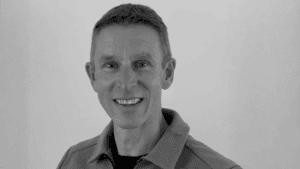
Spargle meets Ronald van Drunen
Head of E-commerce Interim @ Elektramat
What is your current role?
Currently, I serve as the Head of E-commerce Interim at Elektramat through the Eidra consultancy collective. Elektramat is one of the largest Dutch providers of electrotechnical materials, catering to both B2B and B2C customers. Elektramat offers a wide variety of electrotechnical materials, ranging from wiring to power outlets, home batteries, EV charging stations and electrical panels. Eidra is a consultancy collective, combining consultancy, creativity, engineering and data to help leaders create great change.
In my role, I lead the Elektramat e-commerce business. This e-commerce business is crucial for the commercial performance, since Elektramat is a digital pure player. We conduct nearly all sales through our e-commerce platform. The performance and reliability of this platform are very important for our company’s success. My primary responsibilities range from ensuring short-term commercial success to ensuring the right set-up for longer-term sustainable and repeatable success, for the customers, the company and its employees. We do this with a team that is a combination of e-commerce experts from both Elektramat and Eidra.
“I lead the Elektramat e-commerce business. This e-commerce business is crucial for the commercial performance, since Elektramat is a digital pure player.”
Have you done this before?
Yes, I have held the role of Head of E-commerce at various companies, prior to joining Eidra and Elektramat. Most recently, I was with Versuni, which was formerly known as Philips Domestic Appliances. There, I led the digital transition during the company’s disentanglement from Philips, which involved significant challenges over the past four to five years.
We needed to make sure that the business could operate independently from Philips, which required developing our own IT systems, processes, and organizational structure. I also spearheaded the commercial side of our digital business, focusing on sales through Philips.com (eventually replaced by home-appliances.philips), the apps and various marketplaces.
Before that, I gained extensive experience running e-commerce in B2B with Staples and managing the D2C business at Bugaboo. Additionally, I consider myself to be one of the co-founders of nikestore.com, where I served as program manager during my 11 years at Nike, launching the site in January 2007. This diverse background has given me the knowledge on how to drive e-commerce successfully in different environments.
Was it a deliberate choice to add B2B e-commerce to your portfolio , or is that just the way the company was structured?
It was really a combination of both my role and how the company evolved at the time. When I was at Bugaboo, my initial focus was very much on B2C. We had built a solid digital platform aimed at consumers, and at some point we realised that many B2B customers were still ordering through very traditional channels like phone, fax or EDI. That led to the question: why not leverage the existing digital platform for B2B as well?
We approached this by splitting B2B into two segments. Smaller B2B customers could use the standard B2C experience, as long as we added essentials like VAT handling and proper invoicing. Larger B2B customers required more complexity, such as customised pricing, assortments, workflows and approvals, all managed behind a login. When I later joined Staples, which was predominantly B2B, that experience really helped me. There, I worked on scaling these kinds of customised digital environments for large enterprise clients. One key insight from that period was that B2B e-commerce is often more complex than B2C, because solutions are built in close collaboration with demanding customers. Still, strong UX principles from B2C remain highly relevant in B2B, since users are ultimately people interacting with a digital experience.
Did you always know you wanted to be heading and running e-commerce?
No, not at all. My career didn’t start with a clear plan to work in e-commerce. I joined Nike in 2000, and it was an incredibly fast-paced dynamic environment. I moved through several roles in a relatively short period of time, which gave me broad exposure to different parts of the organisation and helped me understand how large, complex businesses operate.
Over time, I joined a program management team working on large-scale initiatives across Europe. One of the most defining projects was the rollout of nikestore.com in Europe. This involved taking a technology platform developed in the US and adapting it to the European market, including local requirements around supply chain, payments, customer service and accounting. At the time, e-commerce was by far not as mature as it is today, but seeing early successes from companies like Amazon made it clear that this was a space with huge potential.
I applied for the role internally and got it, which marked my first real step into e-commerce. Once the platform went live, it became clear that launching was only the beginning. There was still a lot of work to be done to professionalise, optimise and scale the experience, which led me into an operations role. That’s where I discovered how much I enjoyed this field, and I’ve stayed in e-commerce ever since.
What really appeals to me is that e-commerce feels like running a company within a company. Delivering a strong end-to-end experience requires close collaboration across IT, supply chain, marketing, finance and customer service. You often work with small, highly specialised teams that can move quickly and make a visible impact. Being able to influence the full customer journey is highly motivating.
“E-commerce feels like running a company within a company. You often work with small, highly specialised teams that can move quickly and make a visible impact. Being able to influence the full customer journey is highly motivating.”
What did you study?
I studied Technical Engineering and Management Science at Eindhoven University of Technology. These disciplines gave me a solid foundation in both technology and business, which has proven very valuable throughout my career.
The technical side helped me understand systems, data flows and the complexity behind digital platforms, while the management science aspect provided insight into strategy, processes and organisational dynamics. These perspectives have been especially useful in e-commerce, where success depends on aligning front-end customer experiences with back-end systems like supply chain, logistics and finance. My studies trained me to think in terms of end-to-end processes rather than isolated components.
Looking back, this educational background connects well with the roles I’ve held across different companies and industries. It helped me navigate complex environments, communicate effectively with diverse stakeholders and consistently focus on delivering integrated, scalable solutions.
What are some of the biggest challenges in your current role?
One of the biggest challenges is that Elektramat is an e-commerce pure-player, meaning that almost all sales go through the website . Maintaining relevance, stability and reliability is essential. At the same time, there is significant opportunity for growth in both B2B and B2C, which requires continuous investment.
That creates a constant balancing act between running the business today and building it for the future. Scaling IT systems, processes and the organisation itself takes time and focus, but you can’t afford to compromise the current customer experience while doing so.
Another major challenge is serving a very diverse customer base. Professional electrical companies have very different needs, expectations and timelines compared to consumers working on DIY projects at home. Between those extremes, there are many other segments, each requiring a tailored approach.
Ensuring that all these customers receive relevant products, clear information, timely delivery and proper support is complex. Defining the right customer segments and delivering experiences that truly resonate with each of them is one of the most demanding aspects of the role.
What are ways you try to overcome these challenges?
We start by being very clear about our long-term strategic direction. We define where we want to be in two to three years and translate that vision into concrete priorities for the coming year and capabilities and people roles that we need.This has been a very close collaboration between Elektramat and Eidra.Business priorities are then grouped into a set of larger initiatives, or “epics,” which guide our roadmap and investments. At the same time, we work in sprints, which allows us to combine long-term projects with smaller, incremental improvements to the existing experience. This helps us balance innovation with stability, while also addressing bugs and optimisations along the way.
When it comes to customer segmentation, a strong data foundation is essential. We use a customer data platform to segment users based on behaviour and purchase history. In addition, we get direct customer feedback about whether they are B2B or B2C and what type of company they represent. This information feeds into our Loyalty and CRM strategy, ensuring that customers receive relevant communication, content and offers. Aligning segmentation, technology and messaging helps us serve different customer groups more effectively and consistently.
“Many B2B customers were still ordering through the traditional channels like phone, fax or EDI. Why not leverage the existing digital platform for B2B as well?”
What trends do you foresee this year?
AI will undoubtedly be one of the most important trends. Not AI as a buzzword, but AI that meaningfully changes how customers interact with e-commerce platforms. Instead of navigating complex menus or searching endlessly, customers will increasingly engage through questions, recommendations or even image-based input.
This shift has the potential to fundamentally change the shopping experience, making it more intuitive and efficient. We’ve already seen early examples of this, such as guided product selection for complex categories like appliances, and I expect this to become more widespread.
AI also brings efficiency gains on the operational side. Tasks like content generation, product descriptions and translations can now be done much faster, freeing up teams to focus on higher-value work.This is yet again an area where Eidra’s capabilities have helped big time.
That said, the application of AI will differ by industry. Selling a consumer product like an air fryer is very different from selling highly specific technical components, where precision is critical. Still, across industries, the common goal will be improving ease of use and helping customers quickly find exactly what they need.
“AI will undoubtedly be one of the most important trends. Not AI as a buzzword, but AI that meaningfully changes how customers interact with e-commerce platforms.”
Who inspires you, and why?
Mathieu van der Poel. He is one of the greatest Dutch cyclists and knows beforehand where he can excel, where he needs help and where he should take a step back in favor of his team mates. He is an excellent team player in an individual sport who always pushes himself to the limits. This makes him a great example for all of us in our (e-commerce) jobs.
What is your favorite documentary, and why?
Although it may sound a little sad, I quite like Aircrash Investigation, for the typical insight that an accident never comes on its own. In the far majority of cases, it’s a combination of people, tech and processes where multiple things go wrong simultaneously. To give that a positive twist: You need people, tech and processes to be seamlessly balanced in order to be successful.
